Until the late 10th century, Iceland was home to murderous, seafaring, bloodthirsty Vikings. Around that time the less bloodthirsty and more romantic Vikings took to writing sagas about their havoc-wreaking colleagues, and documented many colorful adventures and exciting discoveries (and murder, of course. Don’t forget the murders). When Christian monks began to cross the ocean in hopes of persuading the Vikings to put down their battle-axes and try something peaceful for a change, they found Viking sagas that already described Iceland’s supernatural world. So the monks added a religious twist and the Vikings, who were never too particular, ran with it. Time went on, and in the 18th and 19th centuries this supernatural world finally came to light when Icelandic newspapers and magazines began to describe their magical creatures in more detail.
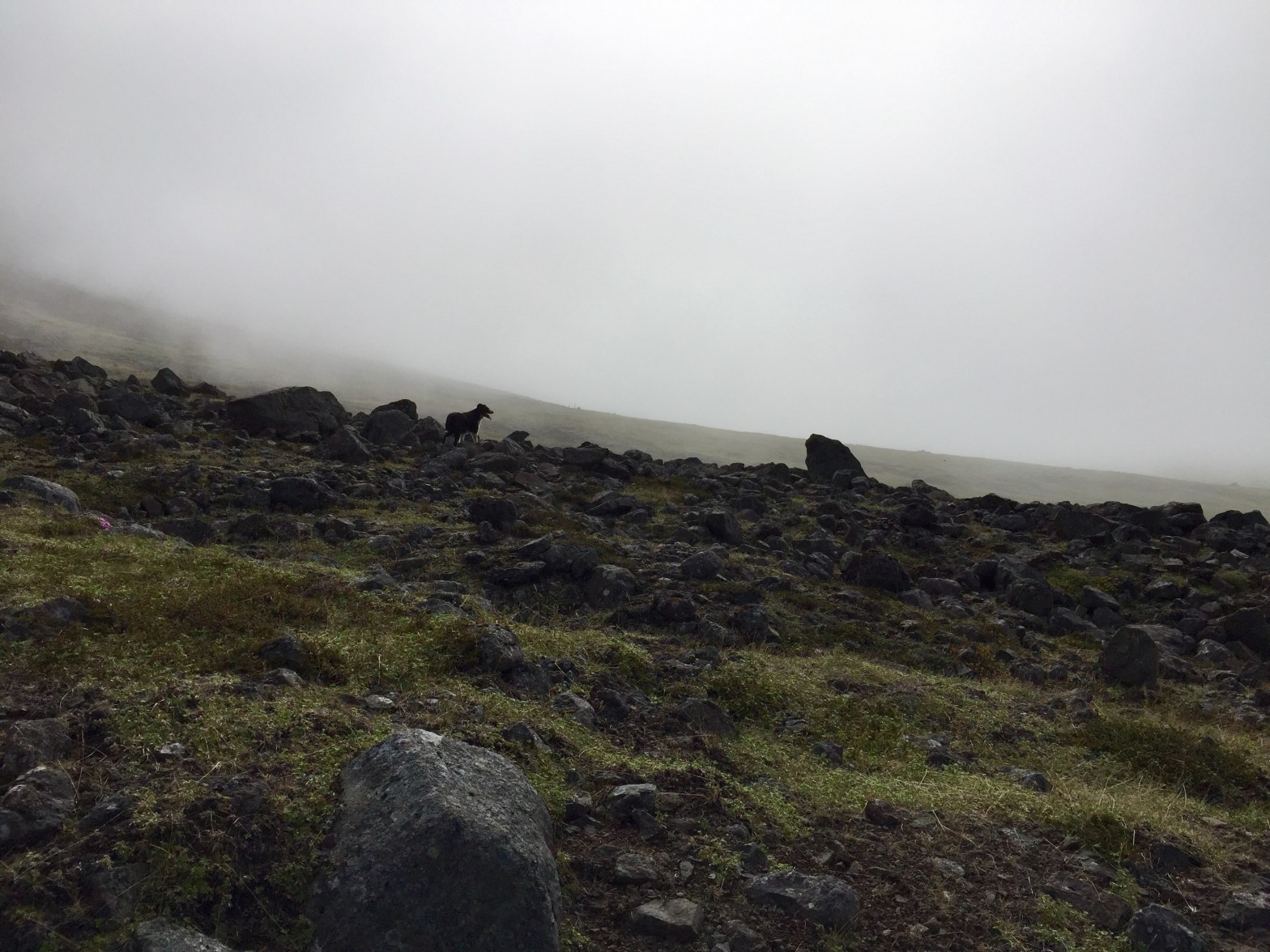
Iceland is a rough and wild place. The Aurora Borealis lights its darkened skies every snowy winter. Wind keeps its mountains clear of trees, and pushes monstrous boulders down its cliffs. But Icelandic boulders are very unusual. They are no average rocks – they are homes. Inside every big stone that rolls down the mountain is *drumroll, ladies and gents!* a Huldufolk!
Huldufolk (meaning Hidden People) are the guardians of Icelandic nature. They live in the rocks and crevices in every mountain in Iceland.

There are two explanations for how the Huldufolk came to be. The first is that one day, when Eve was washing her children in the Garden of Eden, the Lord came to her and asked to see her children. She was a bit startled, so she stashed the dirty offspring behind some shrubbery and showed God only the clean children. But the Lord knows all, so He called her out and said, “because you have hidden your children from me, they shall be hidden from man forevermore.” And that was that.
The other explanation is that the Huldufolk are the angels who neither rebelled against God nor stood by Him when Satan was cast out of heaven, so the Lord condemned them to the earth to live in the rocks and hills.
Whichever way it happened, the Huldufolk found a home in Iceland where their human neighbors believe very earnestly in the Huldufolks’ existence. Apparently, Huldufolk are just a magical version of us. They wear 19th century dress, they ride horses, they have difficult childbirths and require human assistance with such, and they will inflict disease or mayhem on anyone who disturbs their stony homes. They have always known when and where is the best place to fish, and if you respect them, they will respect you.
Heiðdís, one of Elsa and Nonni’s daughters, told me a local story about a recent Huldufolk encounter. When they were paving the road for the first time a few years ago, a very large boulder rolled down the mountain and came to rest directly in the planned path of the road. The road workmen went to great lengths to remove the boulder from the path. They even tried drilling into it, but every drill they used would break. In the midst of all their drilling and huffing and puffing, a man came to them and warned them not to remove the boulder from its place. It was a Huldufolk home, he said, and there would be consequences if they proceeded.
The men ignored this warning, and promptly they and the surrounding village became very ill. Finally they came to reason, and paved the road around the boulder. To this day, the road runs in a semi-circle around the boulder before continuing in its original path.
Another Huldufolk tale is about a couple who built their pantry wall around a stone near their house, instead of removing it. One day, the wife went out to the pantry and saw a wooden bowl sitting on the stone. Upon asking the servants, she found that no one had seen the bowl before. Obviously this was a very practical and reasonable lady, so she filled the bowl with milk, and set in for the night. The next day, the milk was gone, so the woman refilled it and continued to do so every day for the following year. One night a lady came to her in a dream, and said, “because you have helped me, I will help you.” The next morning there was a lovely dapple-grey calf in place of the wooden bowl, and the calf went on to become one of the best dairy cows in Iceland. It stands to reason that if you ever encounter a strange wooden bowl in Iceland, you’d best fill it with milk.
I was walking with Nonni in the field yesterday while he mended the fence. The wind blew my hair around and the sun warmed my cheeks as we stepped between the stones on the mountain. “Nonni!” I pointed at one. “Err Huldufolk?”
He nodded very seriously. “Yes. Huldufolk there in.” (He always says “there in,” instead of “in there.” He also says, “there out,” “there up,” “there over,” etc.)
Many Icelanders wholeheartedly believe in their supernatural companions and have incorporated this respect even into their laws. For instance, it is illegal to pick a cluster of moss from a rock. Not only is this disrespectful to the Huldufolk, but it is disrespectful to nature and the moss, that has lived there for sometimes over a century.
It’s strange for me to live in a place where this is taken so seriously. Everyone I have asked nods and solemnly affirms the existence of the supernatural creatures, without a hint of irony. Perhaps it is simply out of respect for tradition, or history. Whatever the reason may be, I know the Huldufolk are as much a part of the Icelanders’ lives as milking the cows every day, or shopping at the grocery store. They are everywhere.
So sleep lightly.
Even the rocks have eyes.

 Devin Leigh Snyder