
Yesterday, it was supposed to snow. It did not, though the temperatures and wind clearly wanted to. After chores at 7am, I mowed the second half of Iceland (I mowed the first half last week) with a push-mower that works until you bring it to a particularly daunting patch of 5” high grass. Then it sputters and sneezes, and threatens to give out. But my will prevails, and though the push-mower does not want to, I push it over the grass anyway. Every time I pull the ignition cord, I summon the Holy Spirit and remind Jesus of His promise in John 14:14, “You may ask me for anything in my name, and I will do it.” So I ask in His name that the lawn mower starts. If I don’t, the lawnmower (which I’m sure is outside of God’s will most of the time) will not cough or even wheeze.
Anyway, I willed it over the rest of the yard that it absolutely refused to mow last week, and now all is well. Only the first half has now reached its previous height. C’est la vie, no?
Around lunchtime, Miss Elsa asked me if I wanted to go with her to Isafjordur. Yes, of course I did, so I scrambled into my grass-stained suede Vans and a wool coat, and out the door I followed her with camera in tow.
The narrow road to Isafjordur winds through a positively lovely, snow-capped mountain pass, lined with waterfalls and sheep fields and ancient stone ruins.
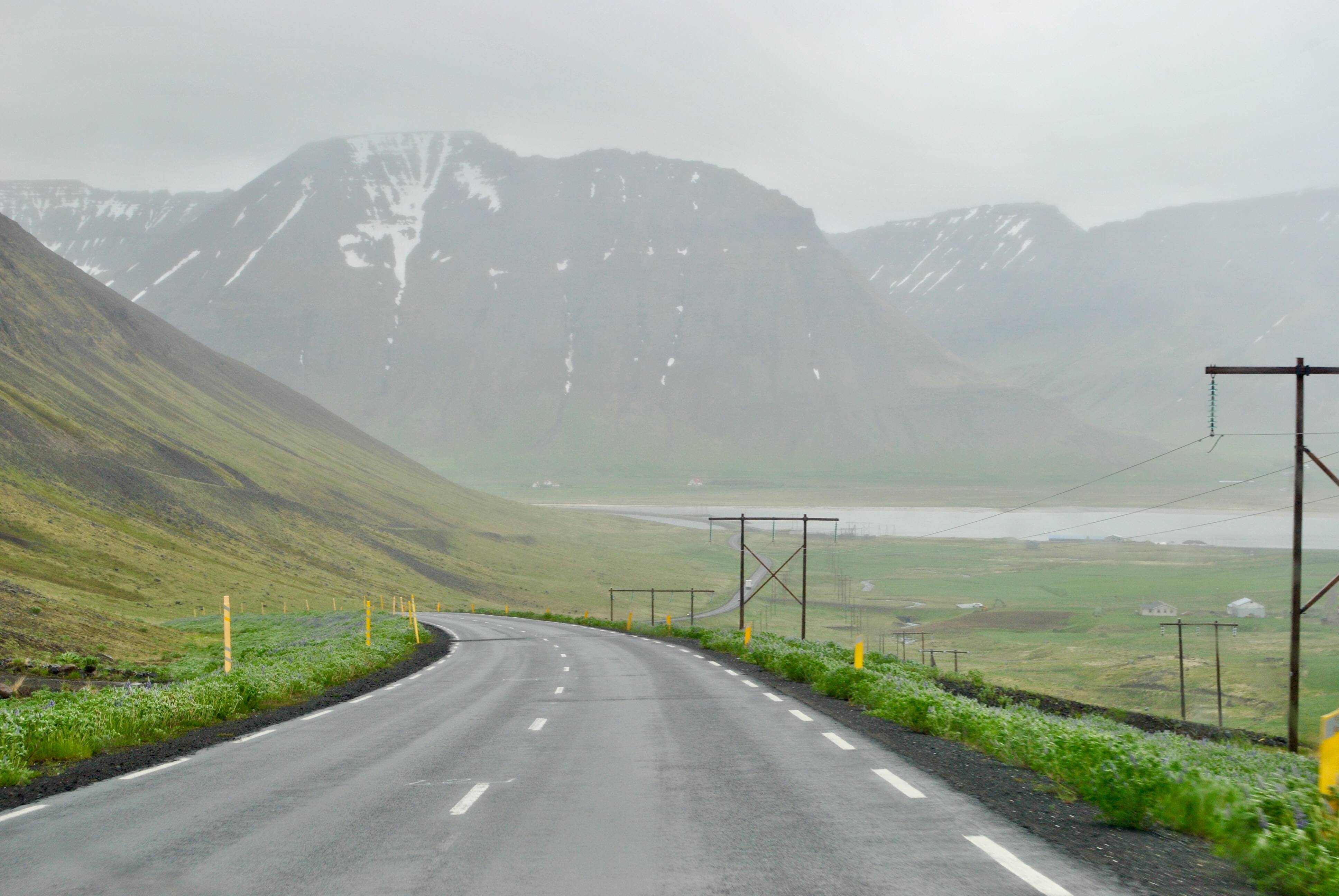
About 5 km of the way goes under a mountain, making it home to the longest tunnel in Iceland. This tunnel is unlike the American type, which is all round and concrete and tame and perfect. Contrarily, the tunnel to Isafjordur is simply a very long hole drilled through a rock, with paved asphalt inside. The dripping, uneven rock walls echo a very Lord-of-the-Rings-ish theme, and every time we pass through I feel like a triumphant hobbit on the other side of Mordor.
Just before we reached Tunnel De Mordor, I realized in my haste to get to the car I had forgotten my phone.
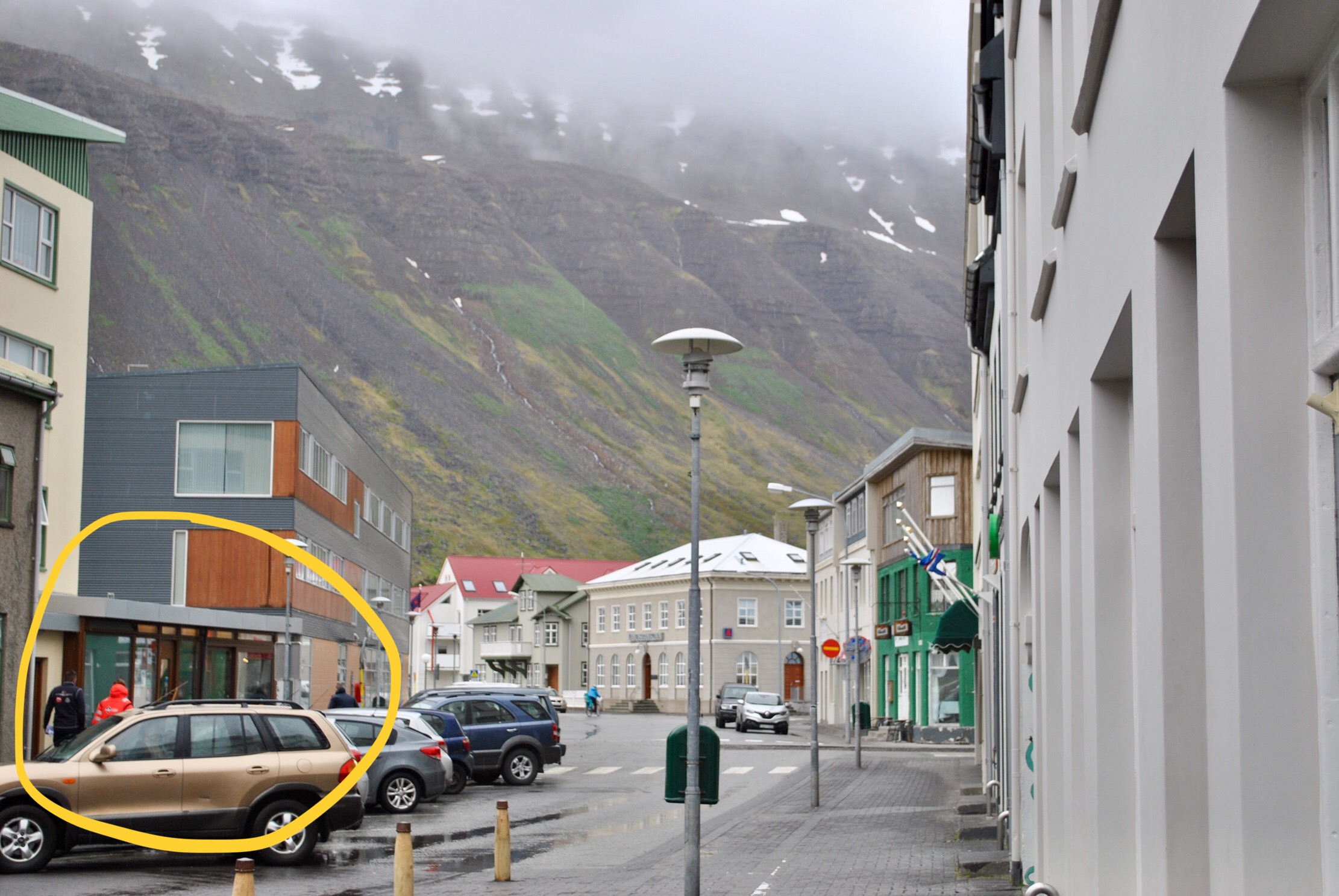
No worries! Miss Elsa and I agreed to meet at the central ice cream shop in an hour, once her interview in town was over. She dropped me off in town, and proceeded to her meeting. Alone on the little street, I realized three things very quickly:
(1) It was sleeting and windy.
(2) My wool coat may carry me comfortably through a Georgian winter, but not an Icelandic summer.
(3) I needed to get inside fast.

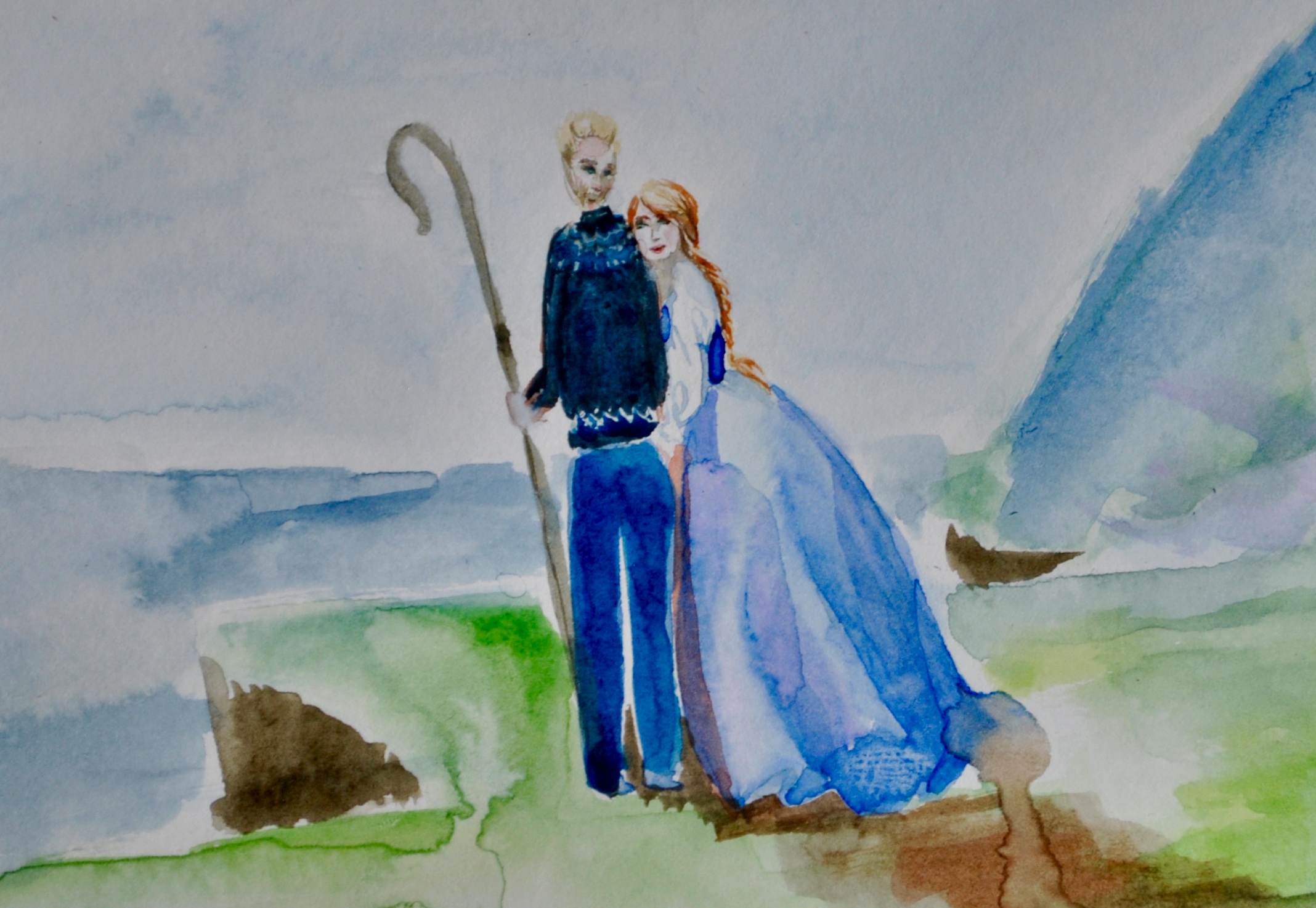
First, I fast-walked to the bookstore. Inside, two customers to my left spoke in American English. It crossed my mind to ask where they were from, and have a decent American conversation for once this summer. But I was too invested in a book of ancient Icelandic troll legends to bother venturing over to them. Here’s the short version of what I was reading:
Once, there was a sheep farmer named Grímur (Gree-mur) who had a daughter named Ketilríður (Kettle-reeth-ur). Every evening, they would round the sheep to the sheep house to be milked. One evening, 24 of the sheep were missing from the herd. Grímur was saddened by the event, but after much searching the sheep could not be found, and so he gave up hope. Then his daughter Ketilríður came to him and asked if she could go find the sheep.
“My daughter,” Grímur replied, “I always knew you had a man’s heart in your woman’s breast. But the mountains are full of evil, and I cannot allow you to travel to your death.” However, after much persuasion, he allowed her to venture forth, but only in the company of a servant boy.
Out Ketilríður went. But once out of sight of the farm, she commanded the servant boy to turn back. “But you will die out there!” He pleaded.
“If I die, that is on me. You are innocent,” she told him firmly. So he returned, and on his return to the sheep farm everyone panicked and cried and all that.
Meanwhile, Ketilríður lost her way in the middle of an Icelandic mountain snowstorm. But on she pressed. After traveling all night, she descended a very steep cliff to a flat valley, where she found a very isolated farm. She knocked on the door, and a pretty good-looking shepherd answered the door. “My name is Þorsteinn [Thor-stine],” he greeted. “This valley is unsettled, and this is the only farm in the valley. What are you doing here?”
Ketilríður explained her mission, and Þorsteinn answered “yes, your sheep arrived here not too long ago. But hurry inside, I must hide you now and no matter what happens you must not stir even a muscle.”
So Þorsteinn took her down to the cellar (very sketchy, if you ask me) and hid her underneath the floorboards. While Ketilríður hid, she heard six pairs of feet scuffling and banging furniture around, as if six creatures were violently searching the house. After a while, they left, and Þorsteinn opened the trapdoor. “You are safe, for the time being. I will send you off with your sheep and my trusty dog, Sörli. He is as good a shepherd as any man, and will return to me once you have reached your farm. I ask only two favors of you: that you do not marry until you hear what has happened to me, and that you gather forces on your return home and respond if I summon you.”
Naturally, Ketilríður was the perfect heroine and she agreed to these terms. Off she went. After a dangerous and intrepid journey, she arrived at her home and there was much celebration. Þorsteinn’s dog helped Ketilríður round the sheep right into their pen before it returned home. Although I’m sure it was all very exciting, Ketilríður remembered her promise to Þorsteinn. She rounded up 24 very strong men, to keep ready in a time of crisis.
After a few months had passed, Þorsteinn came to Ketilríður in a dream, asking her for help. The next morning she dressed and went out. Sure enough, Sörli the dog awaited her on the doorstep. Ketilríður roused her troops (led by a man named Keta) and off they went to Þorsteinn’s farm. Behind his house, Ketilríður told Keta to keep his men hidden and she would go in to scout out the situation. Because Icelandic people are super chill, he was down with that. In she went, and she was greeted by six very sinister-looking people sitting at a dinner table: a father, grandmother, two sons, and a mother and daughter. The sinister father-figure asked her to sit down, but Ketilríður had a feeling his request was more of an order. She sat at the table across from the two sons and the father asked for some meat to be presented to Ketilríður. So the grandmother slid a plate of human flesh toward her. “Ah,” Ketilríður said. “I am unused to this type of meat. May I have something else?” So the grandmother slid a plate of smoked lamb toward her. Ketilríður ate with them, but just after the meal the father ordered the sons to grab Ketilríður and hold her down while he sharpened the knife. Being a nifty little lady, Ketilríður asked to be able to sing her final prayer so that God may take her soul. The wicked father gave her permission. Then she protested that she must sing it outside, because God would not take her soul from inside such a place. So the two sons dragged her outside, and she sang something like this:
Keta, Keta, Keta dear,
Come save my soul fro death so near
God will aid my rescue here.
OUT jumped Keta and his men to rescue her! They slaughtered the evil family of six and Ketilríður found Þorsteinn tied to a chair in his own shed, with his feet soaking in a pail of cold water and a plate of smoked lamb just out of reach. He was endlessly grateful to her and traveled with her and all the troops back home to ask Grímur for Ketilríður’s hand in marriage. Of COURSE he said yes, because Þorsteinn was super strong and manly and amazing. The two married and became the most magnificent power couple ever to live in Iceland. The end.
After reading that story and scribbling the names of each character on my palm because I had not brought a notebook, I set the book back on the shelf and walked up to the cashier.
He provided me with 20 postage stamps and a notebook, which was entirely way too expensive but very necessary.
Next I walked to the cafe, where I purchased three candy bars and a bag of almonds in fluent Icelandic. “Fluent” means I said “Yao,” when I was pretty sure the cashier had asked me a question, and “takk,” when she was finished processing my transaction. What she really said, I have no idea. But she smiled and talked to me in Icelandic, which they only do if you act in a particularly Icelandic way. Then I sat at the window and ate my almonds and felt very successful for having wandered around town and done so many things and not given away the fact I was foreign.
 Devin Leigh Snyder
Icelandic folklore makes all my dreams come true. Thanks for that. I love the painting. ❤️
LikeLiked by 1 person
Thank you!
LikeLike
Beautifully written Devin! Thank you for sharing your experiences! XO
LikeLiked by 1 person
Thank you so much!!
LikeLike